J-Drama Sampler
Three Dramas from Three Decades

Lately I have been slipping more and more into the world of Japanese dramas, and while I am far from an aficionado comparable to my breadth of anime knowledge, I have been discovering some fascinating and moving works. In this post I’d like to share three that I’ve watched recently that have left an impact on me. There isn’t a thematic connection between these series, all three are different genres and are from different times, but the choice to write on these is simply an intersection between my summer break watches and leaving an impact on me. I decided to put all three into one article instead of reviewing each separately in order to demonstrate the variety of Japanese drama without overstating or overanalyzing each one. Part review, part recommendation, part appreciation post, this write-up is meant to give you a sampler of what is out there to watch.
Tokyo Love Story 東京ラブストーリー (1991, Directed by Nagayama Kozo, Screenplay by Sakamoto Yuji, Fuji TV)
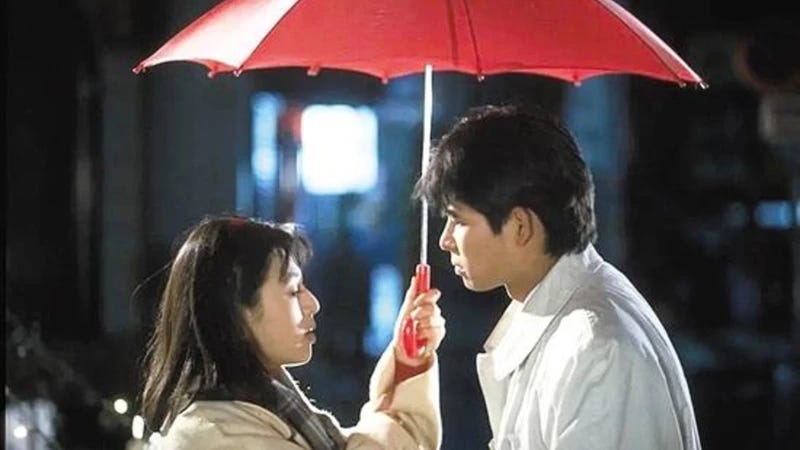
Tokyo Love Story is considered a classic of Japanese television and recently has been added to Netflix, receiving a renewed popularity and an international reach, and I was certainly excited when I saw it on the catalogue. With such an obvious title, you can already assume what to expect here, but even with those expectations, Tokyo Love Story is far from dull. The story involves four protagonists, two men and two women, all living in the big city; they bounce off each other romantically as they navigate their feelings and youth. Structurally, this is a very standard romantic drama, there aren’t any twists, tricks, or unique scenarios in the plot. Instead, Tokyo Love Story focuses on the meandering and messy nature of young adult romance, as characters make mistakes, struggle to balance careers with dating, and fail to shape the boundary between friendship and relationship. In particular, the character writing in this series is incredible. Particularly in the main heroine Rika, played by Honami Suzuki, who well encapsulates the ways people set up emotional walls of a light, bubbly exteriority to avoid confronting their insecurities. The writing and directing choices make the viewer sympathize with her effectively, especially as the protagonist Kanchi who oscillates between a blundering fool but also a genuine guy, capturing her heart. The main theme song is fantastic and is used effectively to heighten the drama. The rash, irrational decision making of these young protagonists may leave you frustrated at times, like when Kanchi stops to talk with Sekiguchi when he’s literally about to leave for a date with Rika, but the back-and-forth emotional rollercoaster is what makes Tokyo Love Story such an enriching viewing experience.
There’s simply something magical captured in a moment like when Kanchi and Rika arrive at a square, ready to separate after their first date and go home. Because they don’t want to leave they only walk backwards slowly, not turning away from each other continuing their sweet talk, until something wonderful happens.
Atami no Sousakan 熱海の捜査官 (2010, Directed & Written by Miki Satoshi, TV Asahi)
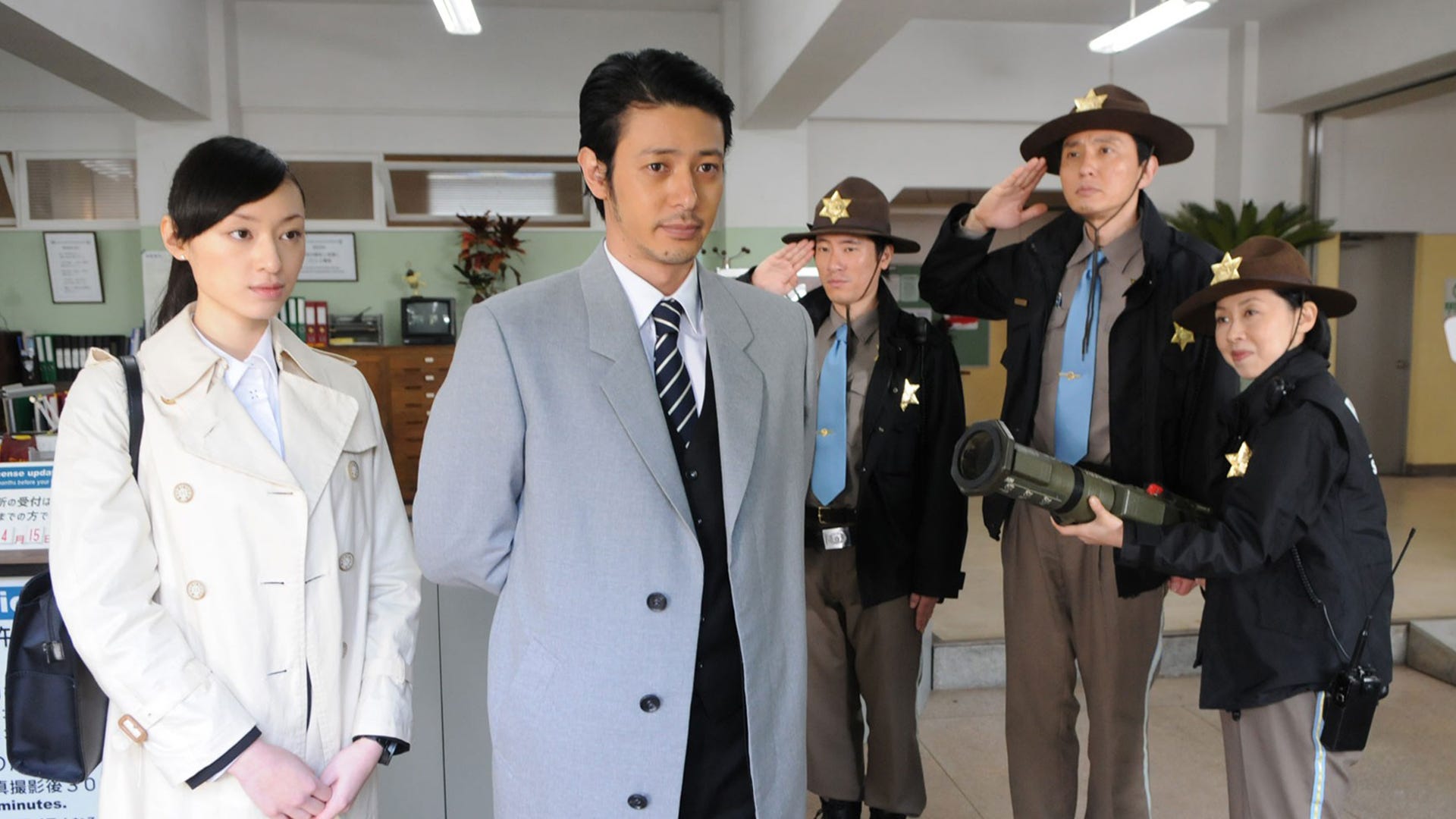
This series might possibly be one of the most intriguing shows I’ve ever watched, a show that kept me on my back foot the entire time. Often referred to as “Japanese Twin Peaks”, Atami no Sousakan follows detectives Hoshizaki and Kitajima, played by Odagiri Joe and Kuriyama Chiaki respectively, descending upon a small-town to investigate a disappearance, with a slight tinge of otherworldly happenings. While practically common knowledge now, Miki’s admiration of the works of David Lynch was never hidden. For example, his film Adrift in Tokyo (2007) borrows from the same sense of deadpan humour and mundane absurdity that many of Lynch’s works, particularly Twin Peaks, are inflicted with. However, in Atami no Sousakan the homages are much more direct. The small-town setting where everyone knows each other, a police station and a diner where scenes of both serious investigation and lighthearted humour can take place simultaneously are central to this series. One character even has Jack Nance’s hairstyle from Eraserhead. While this has led to some humorous confusion online about whether or not this series is an adaptation of Twin Peaks, with comments ranging from “so its just a remake in Japan?” to “it only has some references but it becomes something TOTALLY different”, it is interesting to see the effects of a show so obvious about its influences (including X-Files with its two protagonists) can give impressions oscillating between homage and copy.
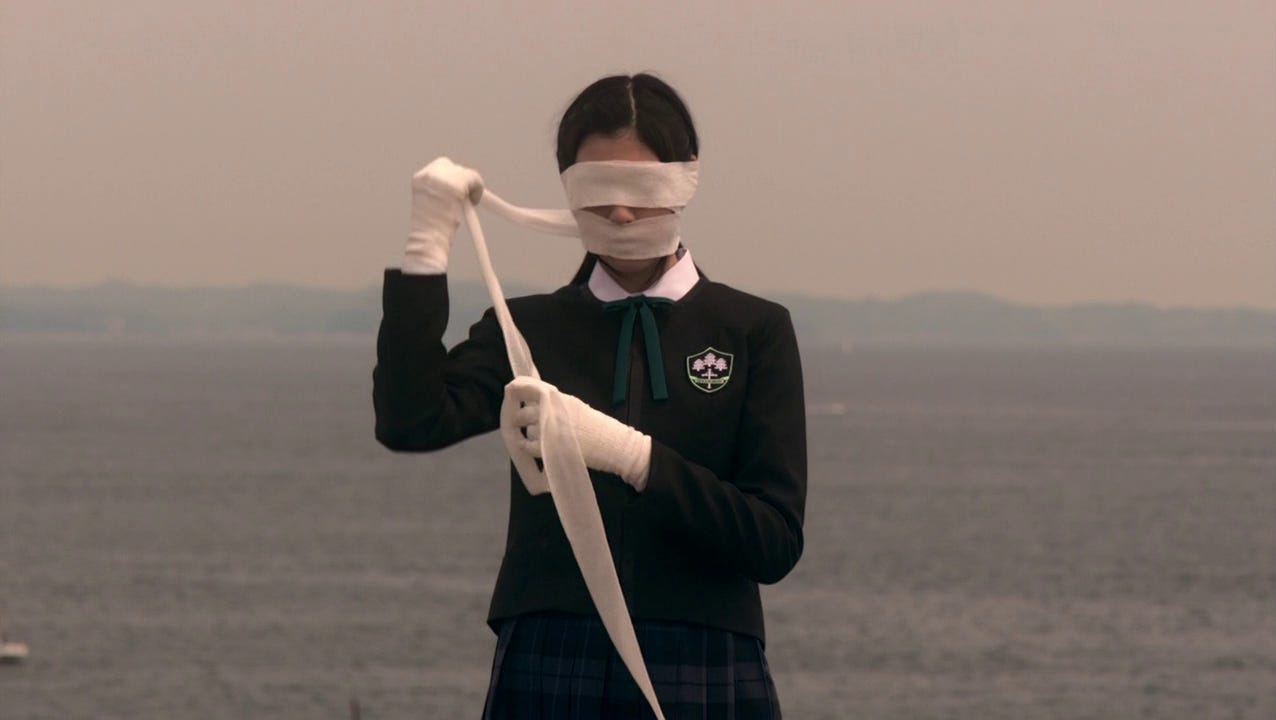
While Atami no Sousakkan is undoubtedly a show born out of Miki’s admiration for Twin Peaks, from beginning to end, it is a wholly distinct series. Primarily, the show’s plot is much more concerned with the central mystery than Twin Peaks’ is. In my view the driving force of Twin Peaks revolves more around the different ways the tragedy of Laura Palmer ripples throughout the community of Twin Peaks rather than finding out who killed her. Conversely, Atami no Sousakan is chiefly focused on Hoshizaki’s investigation of the disappearances of four schoolgirls, entering into an intriguing back-and-forth relationship with the central case. He does this by entering into the diverse web of relationships in the town, but rather than the overlapping of multiple character narratives that come undone with the confrontation with Laura’s death, the characters in South Atami all have their own ulterior but elusive involvement with the case and each other. As such, rather than unfolding into a character drama, Atami no Sousakan is brimming with secrets, many left unexplained or left to interpretation as Hoshizaki enters this dangerous game with not a distinct villain, but rather with the hazy inexplicable notion of “the truth”. Indeed, one of the many strong points of Atami no Sousakan is the way the plot moves forward. Towards the end of most episodes, Hoshizaki or his partner Kitajima resolve one piece of the puzzle that they have been working towards most of the episode, only for a major revelation to occur literally during the ending credits, shaking up a lot of what was already established about the investigation. It’s a clever use of the cliffhanger that leaves tensions high, all the way through to the finale. The more plot-driven Atami no Sousakan is fairly distinct from Twin Peaks, yet with the clear resemblance and homages to the latter this show would have existed without it. Odagiri and Kuriyama’s performances also bring a lot of life to this series, both in its detective story and humourous tangents. If you watch just one of the shows I discuss here, make it this one.
0.5 no Otoko 0.5の男 (2023, Directed & Written by Okita Shuichi, WOWOW)
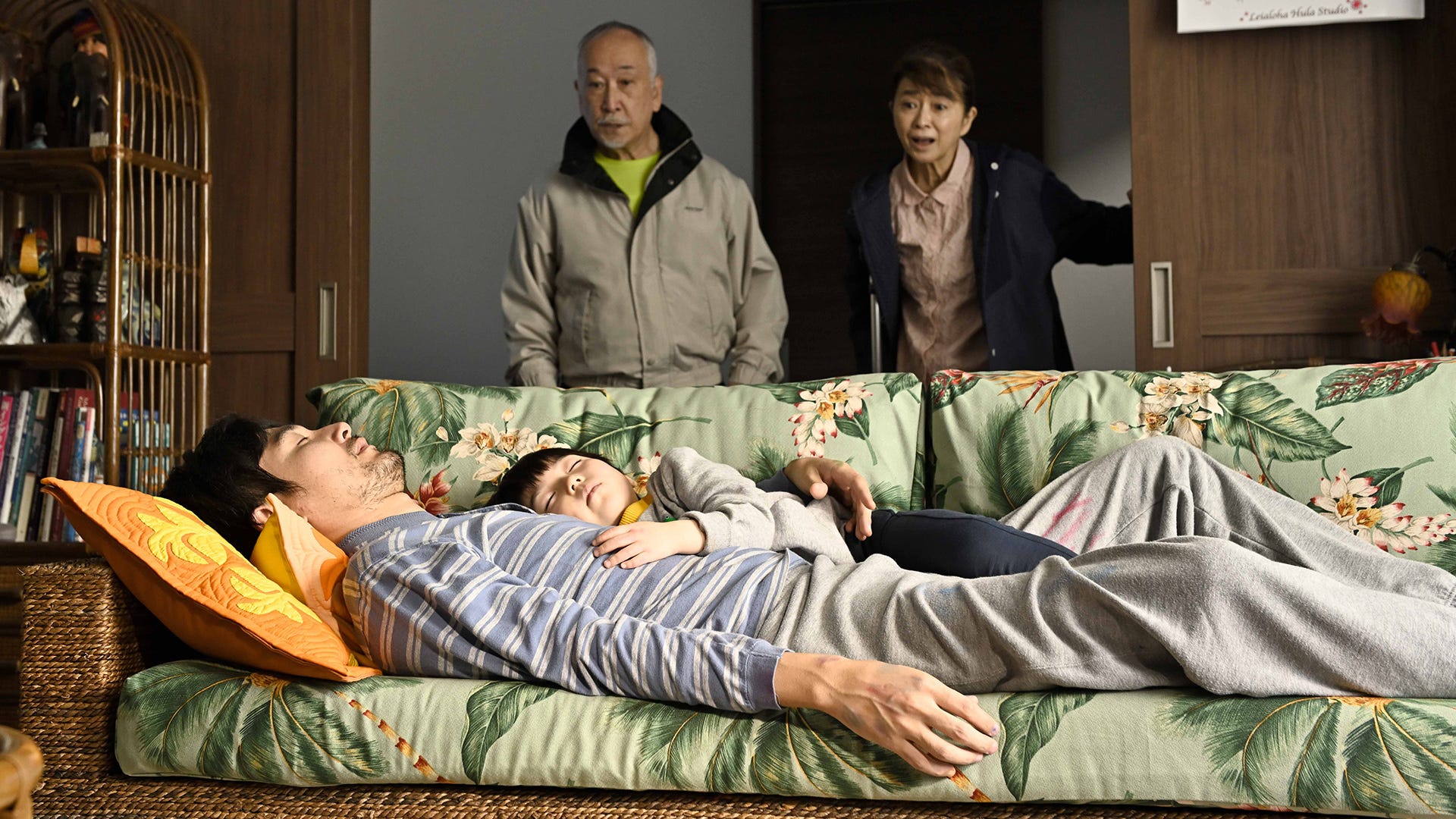
When the grandparent’s house becomes too old and too ill-equipped for the aging grandparents, the Tachibana family moves in all together in a new house, creating a 2.5 family household. Our protagonist, the single 40 year old NEET (shut-in) Masaharu (played by Matsuda Ryuhei) makes up that extra 0.5 of the family. This 6 episode mini-series by director Okita Shuichi, famous for his quirky and heartwarming comedy-dramas such as A Story of Yonosuke (2013) and A Fish Tale (2022), extends his style into a longform format almost with ease. Despite being a socially awkward, unemployed, shut-in, Masaharu is a top player and streamer of the real video game Identity V (like a mobile Dead by Daylight). He was always cared for by his parents, and now living all together with his sister’s family he is confronted by his position as well as his parents’ weakness in old age. The story plays a dangerous game, charting the course of Masaharu’s slow process of coming out of his shell, paralleled with his teenage niece Ema’s (played by Shiratori Tamaki) struggles with her new environment both at home and at school. It’s dangerous because these types of storylines often carry a theme of “becoming normal”, that people who are off need fixing, and while this series does have its pitfalls, its largely played with care. While Masaharu’s shut-in and unemployed attitude is a burden to the family, he is never portrayed as needing fixing and becoming a normal citizen, returning to work and having “normal” relations to people. This is never seen as a goal by himself or any other characters, and instead a number of smaller events allow him to feel more comfortable about going outside, talking to others, and finding a passion. Some examples include: Letting his injured mother sit on his gaming chair for comfort, taking his nephew to kindergarten and making friends with the teacher there, and attending an offline meetup with his Identity V friends.
This can be seen in the way that the video game is distinctly identified rather than just referred to as “video games”, making it impossible to be scapegoated. Identity V plays a key role in this series, serving as the channel for Masaharu’s bumpy relationship with Ema as well as where he achieves sociality, transferring his online meetups to an offline one. What’s important about Identity V is that it’s a mobile game, easy to pick up and share, not bound to a home computer or console. Ema makes her first friend because she notices that the friend has recently started playing while Ema is at her family’s shop, and at the end Ema has made her whole friend group hooked on the game. Whats particularly impressive in this series though is its direction. Okita and his team are pretty dedicated to long takes that draw out emotions from their characters, heightening the melancholic tone and awkward humour. These long takes are also utilized effectively in showing all the family, seamlessly moving though the set of the two story house to show what every family member is up to at the start of their mornings, giving a richer feeling to their interrelationships.